![[decorative stick figure]](images/stick.jpg) 20190925
20190925
![[my avatar]](images/avatars/an32sq.png)
![[Creative Commons licence]](images/cc2.jpg)
Note: the following description may look long at first, but please don't be afraid. 🙂 I have deliberately designed it like a FAQ, so that it is straightforward for you to figure out what I expect. Just take a deep breath, read the instructions carefully all the way through to the bottom, and then ask me if you have any remaining questions.
Answer the following questions, at a level suitable for an interested adult layperson:-
Note: before you start, you may wish to read my Essay Grading Rubric. In essence, I focus on two things: physics accuracy, and how well you explain things (pedagogy).
Stylistically, please write this essay conversationally - as if you are verbally explaining this stuff to your favourite artsy adult relative (cousin, uncle, grandma) who knows little or nothing about science. Use the first person and the active voice. Remember to use paragraphs properly.
Please write about 1500 words of content for the essay (375 words for the outline), not counting references. List your references at the end, after your essay text. Pictures, diagrams, or sketches are permitted, but should be used very sparingly. For formatting, I prefer single spaced, US letter-size (8.5 x 11 inch) paper, 1-inch margins, plain font (e.g. Arial or Verdana), size 12pt, black colour. I do not mind which system of formatting references you use. Please do not bother with a separate title page; just write your student name and number in the top line of page 1 of your essay. Here is a sample essay template.
For essays in this course, I will start out by giving you plenty of sources for the first one and not expecting you to find more than 1-3 sources by yourself. Later in the semester, you will be expected to find more sources on your own. Please see the Librarian's Week 1 .pdf presentation on Quercus for advice about how to do this. You are also welcome to consult me during office hours.
Your primary source of information for our course is my Lecture Notes, which I make available here on this web site. Two accessible books about modern physics for laypeople which you may also find helpful are:-
Universe on a T-shirtby Dan Falk
Elegant Universeby Brian Greene
Please note: as discussed by the Librarian in Week 1, in general Wikipedia is not an acceptable academic reference. There are two excellent intellectual reasons for this rule in our case. First, Wikipedia's accuracy is best on topics that are understood by many people in enough detail for the crowdsourced article to be authoritative, and theoretical physics often falls outside this category. Second, the level of technicality of Wikipedia articles is usually mismatched to our needs. For example, the article on black holes is pitched to a more expert audience than our class, so it would be frustrating to try to learn from. You may of course use Wikipedia as a mechanism of finding reputable pedagogical sources, such as books written for laypeople by physics or astronomy professors or by CERN or NASA scientists.
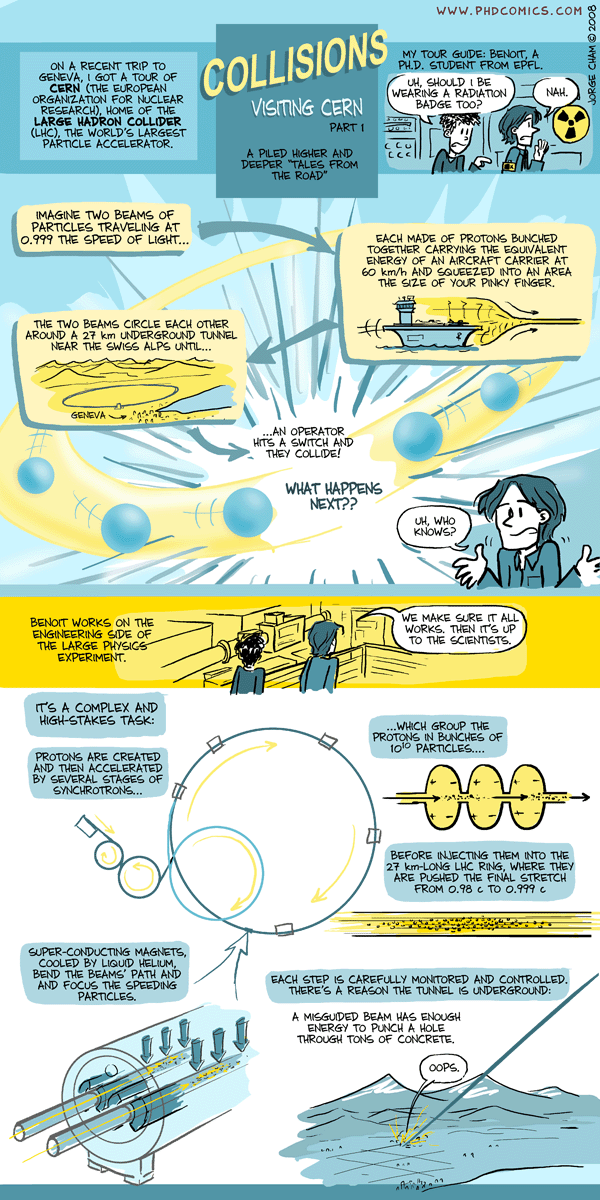
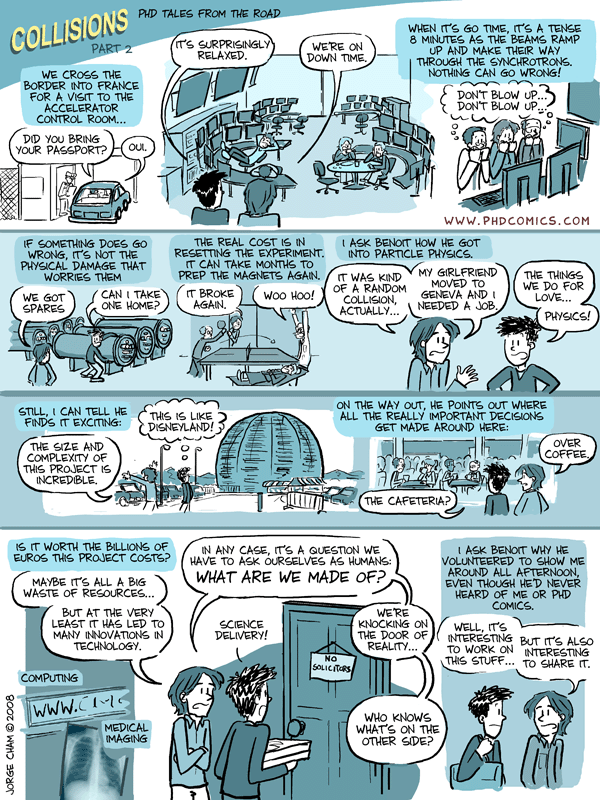
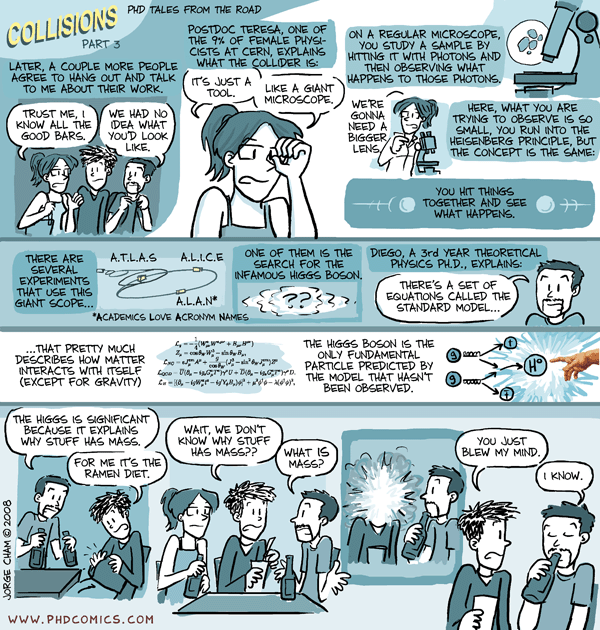
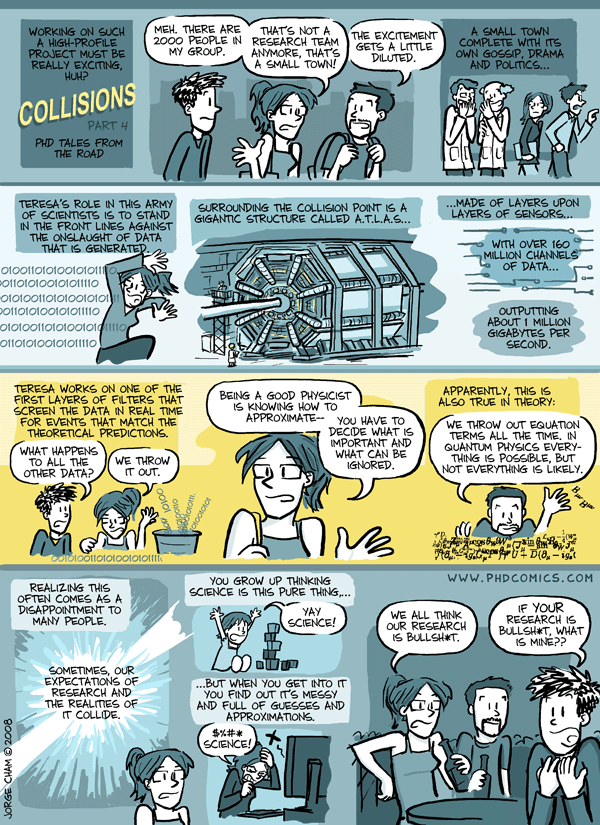
Reputable, understandable sources of online information about the LHC include:
Large Hadron Rap(physicist)
Your 375-word outline should be submitted using the text box provided on Quercus. Your full essay should be submitted by uploading a .rtf, .pdf, .txt, or .docx file on Quercus.
The standard lateness penalty is 5% per day up to a maximum of one week. If you miss the original deadline, it is a really good idea to still submit something, even if it is late by a few days or incomplete. Please also see my deadlines and accommodations policy.
Please include in your essay file your signed scanned Academic Integrity checklist as described below in the Academic Integrity section. If you do not have a printer, you can easily print on campus at the library. If you do not own a scanner, you may take a good-quality picture of your completed form and submit that instead. If you cannot work out how to include this checklist in your essay file that you upload to Quercus, email it to me separately.
Compliance with all UofT academic integrity guidelines is, of course, compulsory. For clarification of what is expected of UofT students, please carefully study the handouts on Academic Integrity (the Writing handouts will also be useful). For example, do remember to properly quote and reference all sources you use, and don't cut-and-paste content from the internet. Please read How Not To Plagiarize.
Essays will be run through the University's TurnItIn.com system for detecting cheating in essays. All this does is checks whether you have lifted paragraphs or phrases straight from common sources without referencing properly. If you practise good citation hygiene, you have absolutely nothing to worry about. If you would prefer not to participate with Turnitin, you must provide alternative evidence that your essay is your own work. You must discuss this with me in person; I require proof of at least two rough drafts along with the finished essay.
You are required to print, fill out, and sign the Academic Integrity checklist. This is mandatory.
20190925